
Pacifica, California · Est. 2026
Reimagining the Future of the Pacifica Pier
A community vision for rebuilding—and reimagining—one of California's most beloved coastal landmarks.
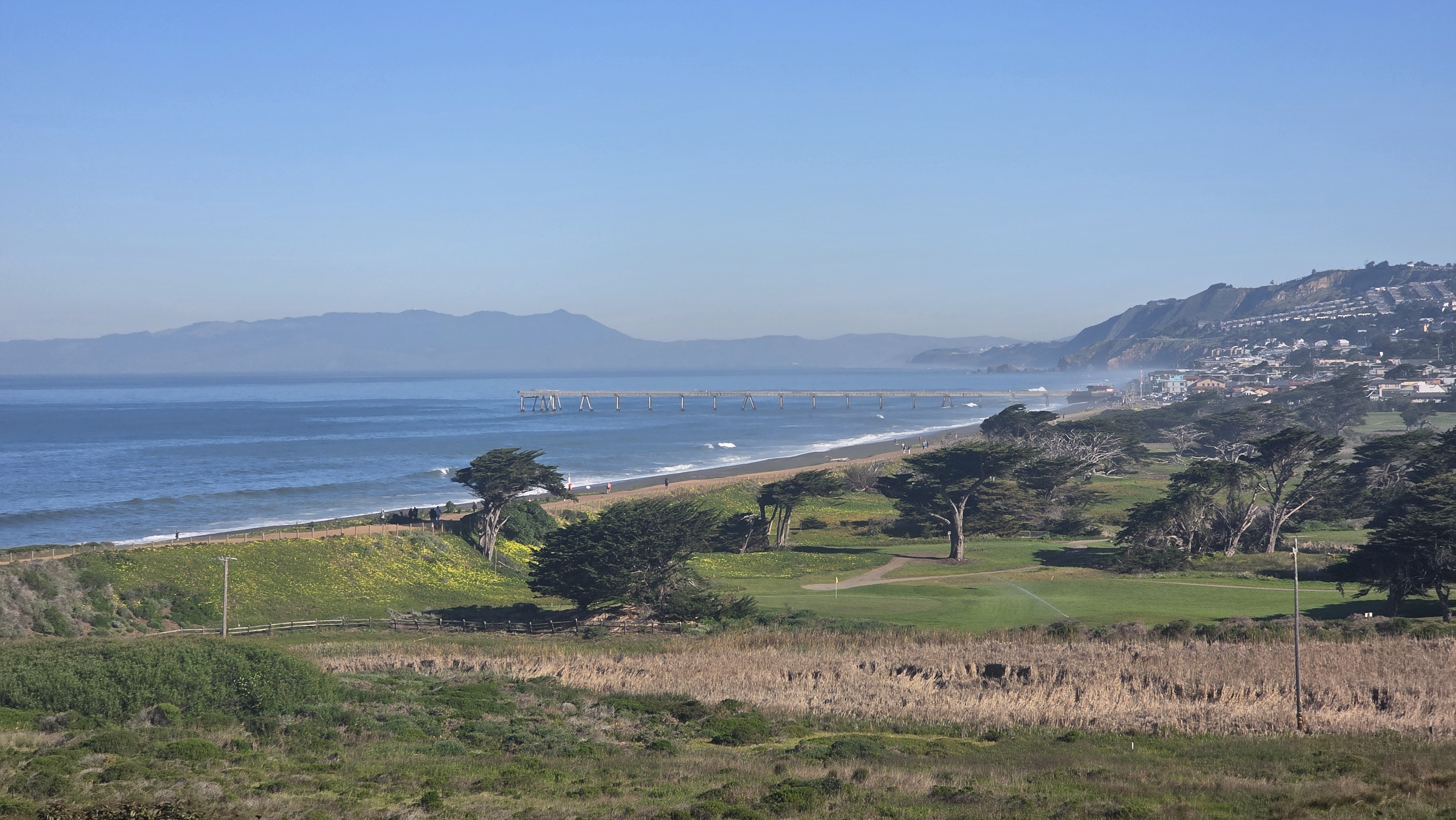
For generations, the Pacifica Pier has been a place of gathering, recreation, reflection, and connection to the Pacific Ocean.
Recent damage has created an important opportunity: not simply to rebuild the pier, but to reimagine what it can become.
The Pacifica Coastal Observatory is a community vision for a next-generation public landmark where science, education, art, stewardship, and civic life come together.
01 — Why the Pier
More Than a Pier
"Every generation inherits a different coastline than the one before it."
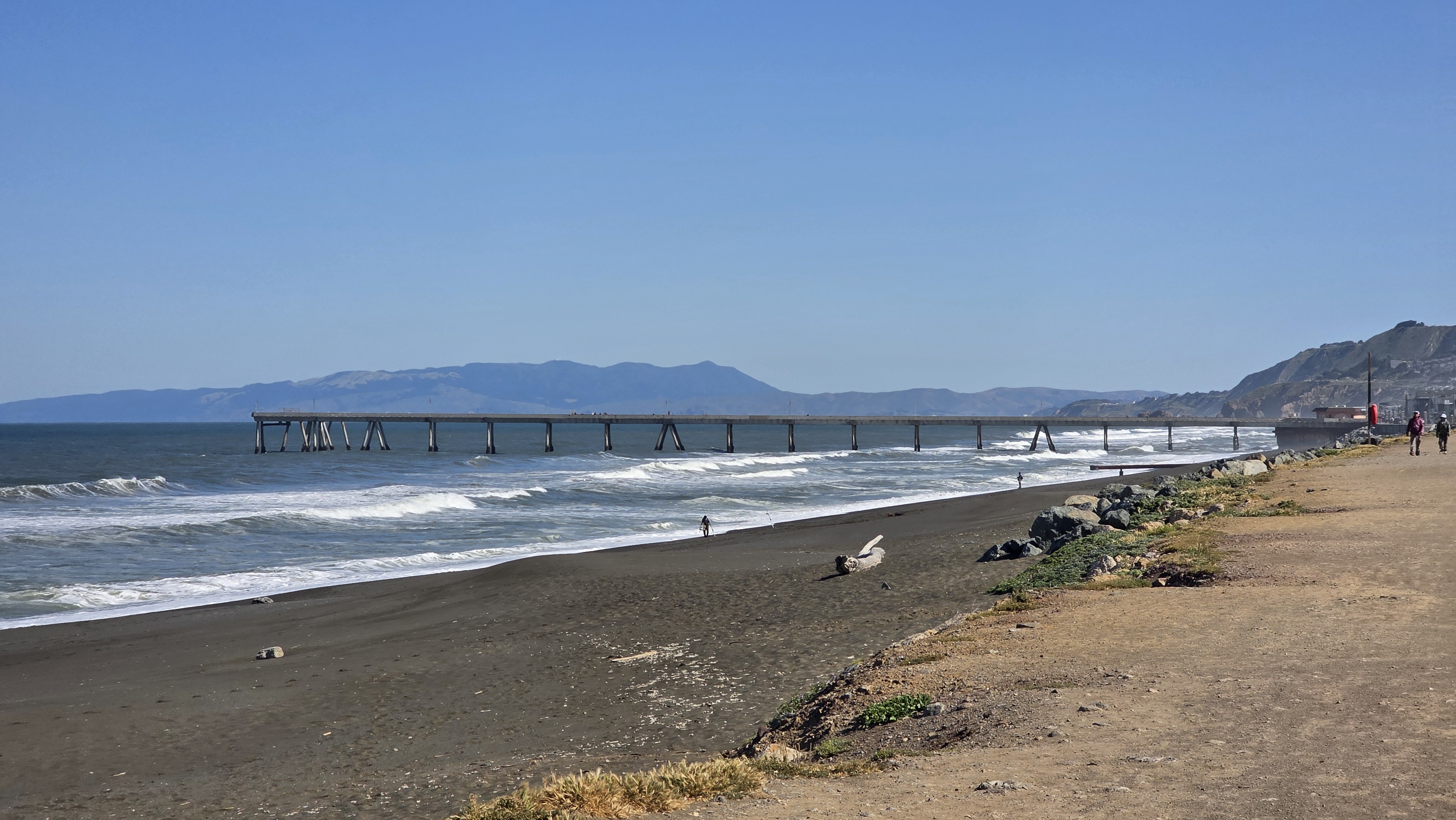
Pacifica Pier · black sand beach
For generations, the Pacifica Pier has been one of the defining landmarks of our community.
It is where children catch their first fish or crab.
Where families watch the sunset.
Where visitors experience the Pacific Ocean up close.
Where residents gather to witness storms, migrating whales, and the changing seasons.
But the pier is more than a destination.
It is one of the few places where Pacifica can observe itself.
Standing between land and ocean, it offers a front-row seat to the forces that shape both our coastline and our community.
Every day brings new tides, weather, wildlife, and waves.
Every year leaves its mark on beaches, infrastructure, ecosystems, and memory.
Every generation inherits a different coastline than the one before it.
The Pacifica Pier reminds us that places are not static.
They are living conversations between people, nature, and time.
As we consider the future of the pier, we have an opportunity to honor that legacy while exploring what new possibilities might emerge.

02 — The Vision
A New Kind of Civic Landmark
Pacifica stands at the meeting point of powerful natural forces and a vibrant human community.
Every day, tides, waves, weather, wildlife, geology, and human activity shape the life of this coastline. Most of these systems remain unseen until they become problems — or disappear entirely.
What if the Pacifica Pier could help make those invisible relationships visible?
The Pacifica Coastal Observatory is a vision for a rebuilt pier that serves not only as a destination for recreation, but also as a place of learning, observation, stewardship, and connection.
A place where residents and visitors can better understand the coast they love.
A place where science becomes accessible.
Where education becomes experiential.
Where public art reflects the rhythms of the natural world.
Where community knowledge is preserved and shared.
The Coastal Observatory is not a replacement for what the pier has been. It is an effort to build upon everything people already value about it while exploring what additional roles it might serve for future generations.
As Pacifica looks toward the future, we believe the pier can remain a beloved public gathering place while also becoming a living instrument for understanding the changing coast around us.
"The goal is not simply to rebuild a structure. It is to create a place that helps people better understand, experience, and care for the coast they call home."
03 — The Observatory
A Civic Instrument for Understanding the Coast
"Pacifica is a community actively negotiating with the ocean every day. The Coastal Observatory helps make that relationship visible, understandable, and worthy of care."
Pacifica is a community actively negotiating with the ocean every day.
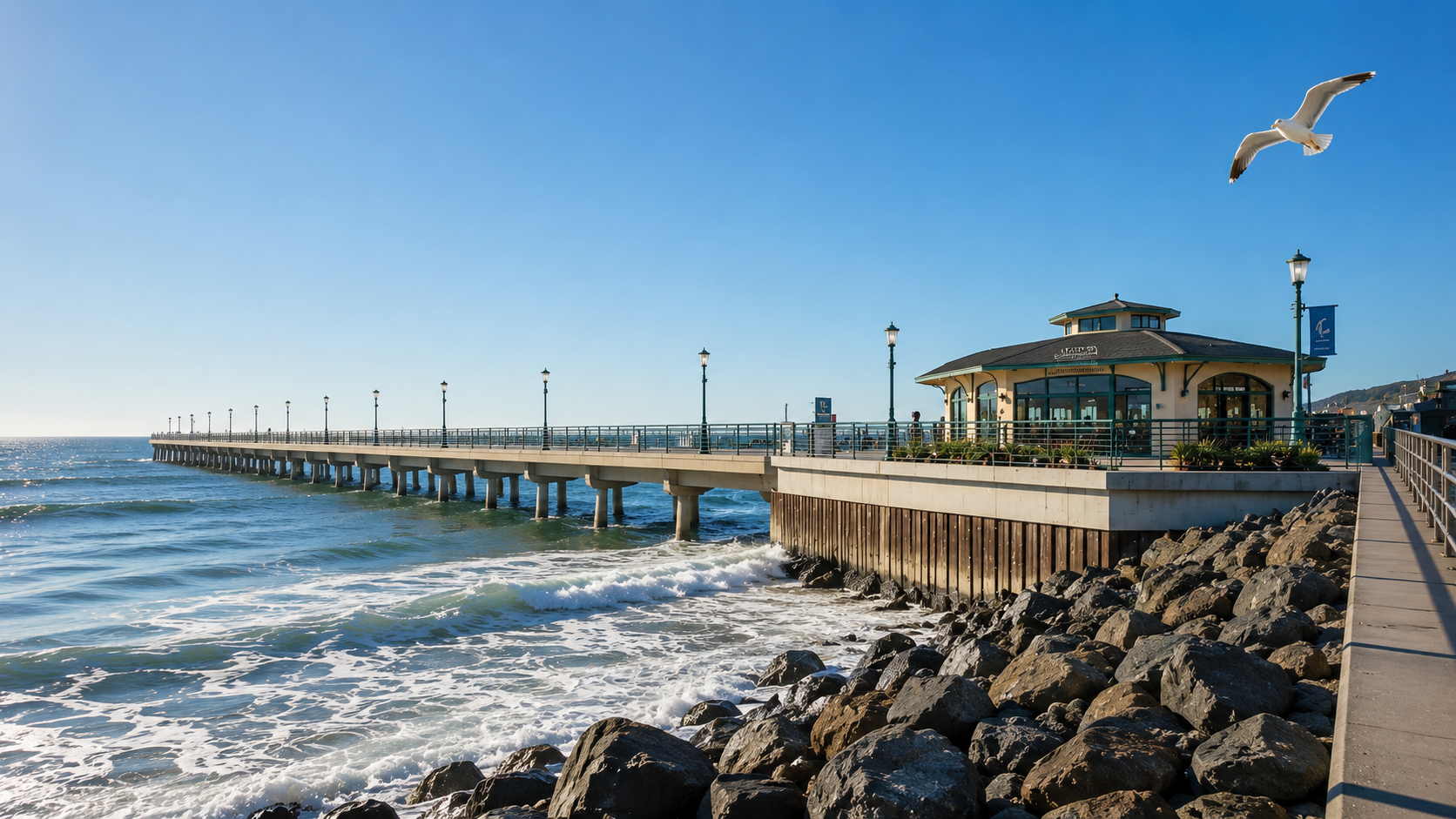
The Pacifica Coastal Observatory is envisioned as a rebuilt pier and public platform designed to help people better understand the coast around them.
Environmental monitoring systems would help document changing ocean and coastal conditions.
Educational installations would connect visitors to the living systems of the Pacific shoreline.
Community observation programs would invite residents to contribute their own knowledge and experiences.
Public art and interpretive experiences would help translate complex environmental information into something accessible and meaningful.
Together, these elements would transform the pier into more than a destination.
They would make it a civic instrument for understanding the changing relationship between Pacifica and the ocean.
Observation
Monitoring tides, weather, wildlife activity, coastal erosion, ocean conditions, and long-term environmental change.
Education
Helping students, residents, and visitors learn directly from the living coastline around them.
Culture
Using storytelling, public art, shared memory, and creative experiences to deepen our connection to place.
Participation
Supporting citizen science, volunteer stewardship, local knowledge, and community collaboration.
"The Coastal Observatory exists not only to document the changing relationship between community and coastline, but to help strengthen it — informing more resilient infrastructure, healthier ecosystems, and a deeper sense of place for future generations."
.png)
04 — Luminous Echo
The Coast Made Visible
The future of the Pacifica Pier will not be built overnight.
Reimagining, funding, designing, and rebuilding such an important public landmark will take time, community participation, and sustained public support.
Yet the conversation about the pier's future must begin now.
The Luminous Echo is envisioned as one of the first public expressions of that conversation — a way of keeping the story of the pier alive while helping the community imagine what new possibilities might emerge.
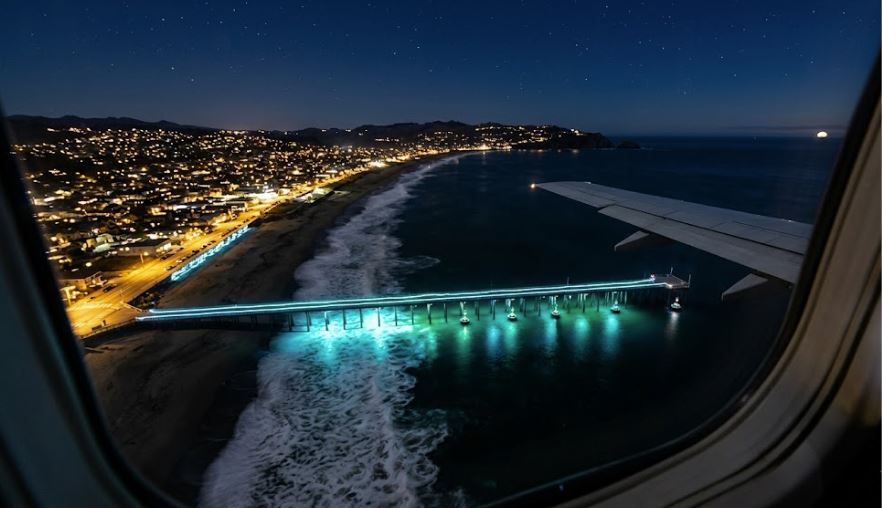
Pacifica Pier · Luminous Echo concept
At the same time, it offers a new way of seeing the coast itself.
Most of the forces that shape life along the Pacific shoreline operate quietly beyond our awareness.
Tides rise and fall.
Whales migrate offshore.
Storms reshape beaches.
Ocean temperatures shift.
Bird populations arrive and depart with the seasons.
The coastline itself changes year by year.
These processes are constantly shaping Pacifica, yet much of their story remains unseen.
The Luminous Echo is a proposed public experience that helps make those hidden relationships visible.
Drawing from environmental observations, community knowledge, and information gathered through the Coastal Observatory, the pier becomes a place where the life of the coast can be reflected back to the people who live beside it.
The Luminous Echo is a civic ritual of coastal observation.
It is not intended as a spectacle.
It is a translation.
A way of transforming observation into experience.
A way of helping people see connections that might otherwise remain invisible.
A First Act
We do not intend to wait.
The full vision for the Pacifica Coastal Observatory will take years to realize. Rebuilding the pier, securing funding, designing the infrastructure, engaging the community — these are long-horizon efforts.
But the Luminous Echo is envisioned as something that could come first.
While the pier remains closed to the public, a light installation on the structure itself would signal to the entire community — visible from the beach, from the bluffs, from the highway — that something is being imagined here. That the pier has not been forgotten. That the conversation about its future is already underway.
A light in the dark is not a small thing.
It is a promise.
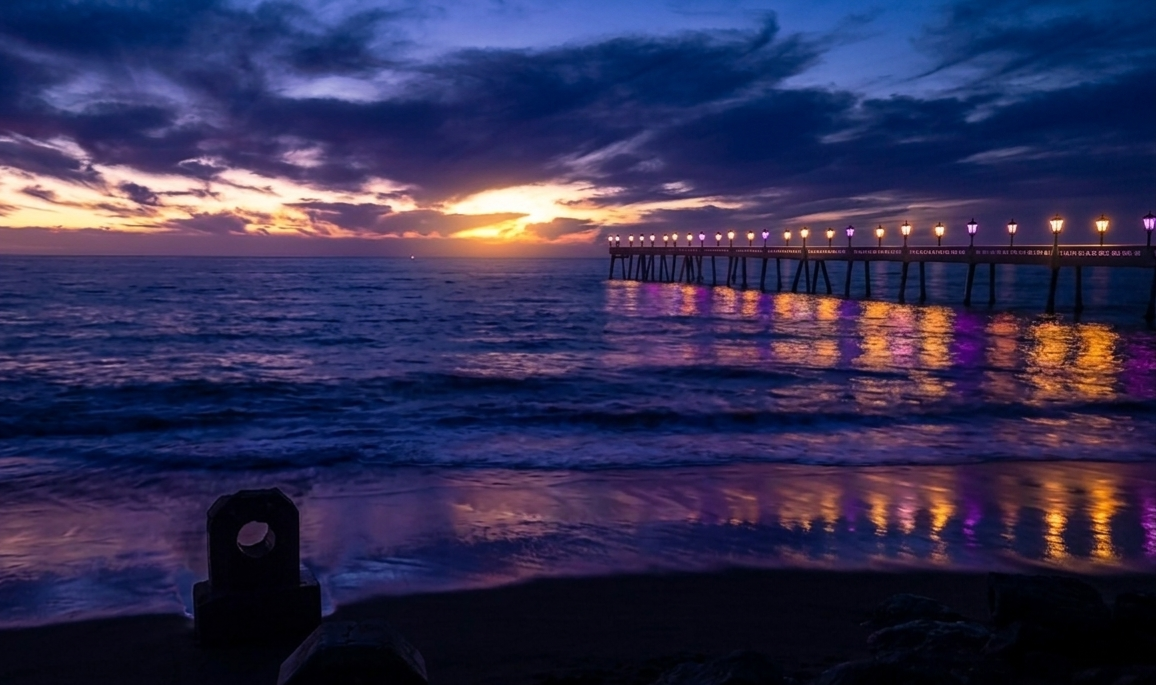
Pacifica Pier · blue hour
Each evening would become a unique reflection of the day that came before.
Wave conditions might influence movement.
Ocean conditions might influence color.
Wildlife observations might influence pattern.
Community participation might influence composition.
No two nights would ever be exactly the same because no two days along the coast are exactly the same.
The Luminous Echo is envisioned as a long-duration civic artwork that evolves throughout the year.
Seasonal changes, environmental conditions, and the passage of time itself become part of the experience, creating a work that is never quite the same twice.
Outside of its daily reflection periods, the pier would remain softly illuminated with subtle seasonal lighting designed to respect the character of the coastline and surrounding community.
As the Coastal Observatory grows, the Luminous Echo may become only one of many ways that Pacifica expresses its relationship with the coast.
But every journey begins somewhere.
This is an invitation to begin.
"The Luminous Echo transforms observation into experience, helping a community see, feel, and remember the life of its coast."
05 — Looking Ahead
Beyond the Pier
The Pacifica Coastal Observatory is not a single project.
It is a framework for helping a community better understand, experience, and care for the coast across time.
The rebuilding of the Pacifica Pier may provide the physical foundation.
The Luminous Echo may become one of its first public expressions.
But many other possibilities could emerge as the vision grows.
Residents might one day:
Receive real-time alerts for whale migrations passing the coast.
Monitor water quality along the shoreline.
Contribute wildlife observations to a shared civic record.
Explore live environmental conditions from the pier.
Participate in pilot wave energy generation programs.
Engage with active seawall and shoreline mitigation efforts.
Participate in community stewardship programs.
Engage with educational programs for students and teachers.
Over time, Pacifica could become a place where coastal science, public education, cultural expression, and civic life come together in new and meaningful ways.
What ultimately emerges will depend on the interests, creativity, and participation of the community itself.
This is not a finished plan.
It is an invitation to begin a conversation about what comes next.